
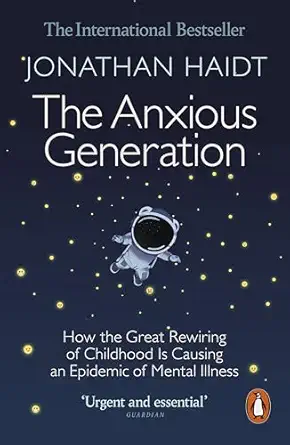
Jonathan Haidt argues that something specific happened to kids’ mental health starting around 2012, tracing it to the shift from a play-based childhood to a phone-based one. He lays out data showing a sharp rise in teen anxiety and depression, connecting it to smartphones and social media displacing unsupervised outdoor play and real-world risk-taking. Haidt distinguishes the healthy risks kids used to take through free play from the very different risks social media now exposes them to. He proposes specific changes for parents, schools, and tech companies, which is part of why this has become one of the most discussed.
Availability:
In StockJonathan Haidt, a social psychologist, argues that something specific and identifiable happened to kids’ mental health starting around 2012, and traces it directly to the shift from a play-based childhood to a phone-based one. He lays out extensive data showing a sharp rise in anxiety, depression, and self-harm among teenagers across multiple countries during that period, then connects that rise to the displacement of unsupervised outdoor play, real-world risk-taking, and face-to-face socializing by smartphones and social media platforms. Haidt distinguishes between the necessary, healthy risks kids used to take through free play and the very different kind of risk social media exposes them to, arguing the trade has been a bad one for development. He doesn’t stop at diagnosis; the book proposes specific, actionable changes for parents, schools, and technology companies, including delaying smartphone access, restricting social media until later teen years, and rebuilding norms around unsupervised outdoor play. It’s become one of the most widely discussed parenting and culture books in recent years, partly because it gives worried parents both a clear explanation for what they’re seeing and a concrete plan, rather than just another diagnosis without a path forward. Parent groups and school communities have used it as.


Reviews
There are no reviews yet.