
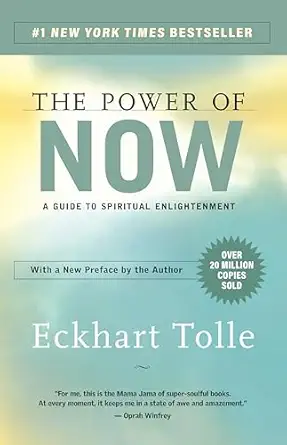
Eckhart Tolle’s central argument is that nearly all suffering comes from living inside your own head, replaying the past or anxiously projecting into the future, instead of being present in the only moment that actually exists. The Power of Now uses a question-and-answer structure, with an imagined skeptical reader pushing back, which keeps dense spiritual material feeling conversational rather than lecture-like. Tolle blends Buddhism, Christian mysticism, and his own account of a personal crisis that triggered his awakening. The book has become one of the bestselling spiritual texts of recent decades and a common entry point into mindfulness practice.
Availability:
In StockEckhart Tolle’s central argument is that nearly all human suffering comes from living almost entirely inside your own head, endlessly replaying the past or anxiously projecting into the future, instead of being genuinely present in the only moment that actually exists, which is now. The Power of Now lays this argument out through a question-and-answer structure, with an imagined reader pushing back and asking the kind of skeptical questions a real person would ask, which keeps dense spiritual material feeling more like a conversation than a lecture. Tolle blends ideas drawn from Buddhism, Christian mysticism, and various Eastern spiritual traditions, while also weaving in his own personal account of a sudden psychological crisis in his twenties that triggered what he describes as his spiritual awakening. He introduces the concept of the ‘ego’ as a constructed, thought-based identity that constantly seeks validation and conflict, and argues that recognizing the ego for what it is starts to loosen its grip automatically. The book has become one of the bestselling spiritual texts of the past several decades, and it remains a common entry point for readers who are new to mindfulness, presence-based practice, or non-religious spirituality more broadly. It’s commonly read alongside other.



Reviews
There are no reviews yet.