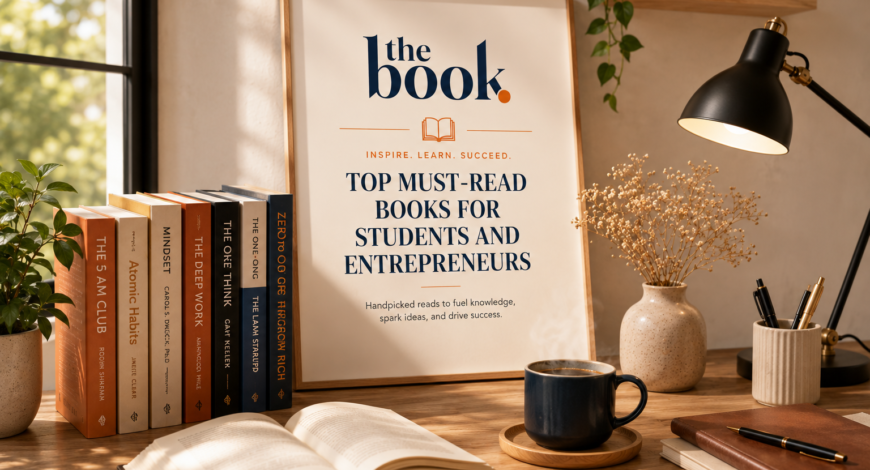
Most advice about success skips the unglamorous part: you have to actually know things before you can do things well. Books are still the cheapest way to close that gap, and the right one at the right moment can save you months of learning things the hard way.
Here are seven that keep showing up on every list, for good reason.
Atomic Habits by James Clear
The premise is almost annoyingly simple: you don’t need a dramatic overhaul, just 1% better, repeated for a long time. I’ve watched people try to build a study routine from scratch and burn out in two weeks — this book is basically the antidote to that. Same logic works for running a business. Small fixes tend to stick around longer than big ambitious plans that fall apart by March.
Rich Dad Poor Dad by Robert Kiyosaki
Nobody teaches you money in school, which is strange given how much of adult life revolves around it. Kiyosaki argues that a steady paycheck isn’t the same thing as security, and pushes readers toward owning assets instead of just earning income. Plenty of people take issue with his specific methods. Still, the underlying question — are you working for money, or is your money working for you — is worth sitting with regardless.
The Lean Startup by Eric Ries
Most startups don’t die because the idea was bad. They die because the founder spent a year building something nobody actually wanted. Ries’s fix is blunt: build the smallest thing you can, put it in front of real people, and let their reaction — not your assumptions — decide what comes next.
Deep Work by Cal Newport
Newport’s bet is that uninterrupted focus is becoming rare, and rare things are valuable. For students that means fewer hours studying that actually count for something. For entrepreneurs it means making the one decision that matters instead of clearing forty emails and calling it a productive day.
Think and Grow Rich by Napoleon Hill
This one’s pushing a hundred years old and people still recommend it constantly. Some of it reads dated now, no getting around that. But the core argument — that persistence matters more than talent once the initial motivation wears off — hasn’t really aged.
Start With Why by Simon Sinek
Sinek’s argument is that people respond to why you’re doing something more than what you’re doing. Useful for an entrepreneur about to write a business plan. Also a decent gut check for a student trying to figure out why they picked their major, versus just going with whatever seemed reasonable at eighteen.
How to Win Friends and Influence People by Dale Carnegie
Written in the 1930s and somehow still one of the better guides to how people actually respond to each other. Listen well. Remember someone’s name. Don’t make people feel small. None of it is complicated — almost nobody does it consistently anyway, which is exactly why the book has outlasted most of its era.
Why Any of This Matters
Reading doesn’t replace doing the work. What it does is let you skip some of the expensive mistakes other people already made — you’re borrowing someone else’s twenty years of trial and error for the price of a paperback.
Building an Actual Habit Out of It
You don’t need hours. Fifteen, twenty minutes a day, most days, adds up faster than you’d think. Pick books tied to something you’re genuinely dealing with right now, write down what actually hits you, and then go do something with it. A book nobody acts on is just a well-formatted list of good intentions.
None of these will build your business or pass your exam for you. But they’ll spare you a few mistakes that are already well documented — which, honestly, is a decent head start. Pick one. Finish it. See what shifts.
If you’re looking for more reading recommendations or want help getting your own story or ideas into a book, check out The Book Dot.